
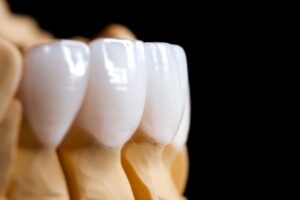
If you’re considering improving your smile, you’ve likely come across both traditional veneers and lumineers. While they serve a similar purpose—enhancing the appearance of your teeth—they differ in several important ways. Understanding these differences can help you decide which option best fits your needs and goals.
1. Thickness and Tooth Preparation
One of the biggest differences between lumineers and traditional porcelain veneers is their thickness. Lumineers are ultra-thin—often compared to the thickness of a contact lens—while traditional veneers are slightly thicker.
Because of this, lumineers typically require little to no removal of your natural tooth enamel. Traditional veneers, on the other hand, usually involve removing a small amount of enamel to ensure a proper fit and natural look.
This makes Lumineers a more conservative option, but it also means they may not be suitable for all cases, especially if significant reshaping is needed.
2. Durability and Longevity
Both lumineers and traditional veneers are made from durable ceramic materials, but traditional veneers tend to be slightly stronger due to their thickness.
Porcelain veneers often last 10 to15 years or more with proper care, while lumineers may have a similar lifespan but can be more prone to chipping in certain situations. The longevity of either option depends heavily on your oral habits, such as avoiding hard foods and managing teeth grinding.
3. Aesthetic Results
While both options can dramatically improve your smile, traditional veneers generally offer more customization. Because they are thicker, they can better mask severe discoloration, uneven shapes, or heavily worn teeth.
Lumineers, being thinner, are more translucent. This can create a very natural look, but it may not fully cover darker stains or significant imperfections. In some cases, the underlying tooth color may still show through slightly.
If you’re looking for a dramatic transformation, traditional veneers may provide more predictable results.
4. Reversibility and Commitment
Another key difference is the level of commitment involved. Since lumineers often require little to no enamel removal, the process may be considered reversible in some cases.
Traditional veneers, however, involve permanent changes to your tooth structure. Once enamel is removed, you’ll always need some form of restoration on those teeth moving forward.
This makes lumineers appealing for patients who want a less permanent option, though suitability depends on your specific dental needs.
Which Option is Right for You?
Choosing between lumineers and veneers depends on your goals, the condition of your teeth, and your budget. Lumineers may be ideal for minor cosmetic changes and patients who prefer a less invasive approach. Traditional veneers are often better for more complex transformations or long-term durability.
Both Lumineers and traditional porcelain veneers can help you achieve a brighter, more confident smile. The key is understanding their differences and working with your dentist to choose the best option for your unique situation.
About the Author
Dr. Ronan Freyne earned his Doctorate of Dental Medicine from the University of Medicine and Dentistry of New Jersey and completed an externship at Monmouth Medical Center in Long Branch, NJ, followed by a general practice residency at Mountainside Hospital in Montclair, NJ. He actively pursues continuing education courses, meetings, and lectures, and has completed advanced training in implant prosthetics and advanced comprehensive patient care. Want a glow-up for your smile? We can help with veneers! Book online or call (301) 986-0700.